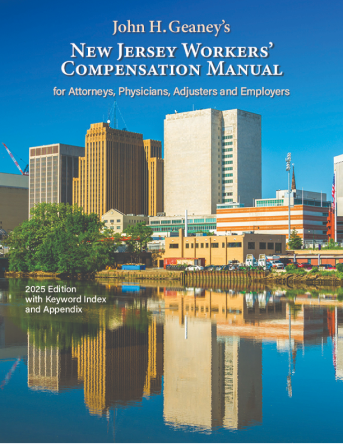




There are three types of benefits provided by employers to employees in NJ workers’ compensation, in those cases that are accepted and not being questioned: 1. Medical benefits (a major benefit to employers in New Jersey is that the employer directs the medical care); 2. Temporary disability (“TTD”), which is for wage loss while an employee is placed out of work by the authorized treatment provider; and 3. Permanency benefits, representing an amount awarded to the employee for functional loss. These benefits are explored in more detail below.
- Medical Benefits: Pursuant to N.J.S.A. 34:15-15, the employer directs the medical care and pays for reasonable and necessary care. This is a major benefit to employers in New Jersey because it means that the employer chooses the doctors and facilities the employee treats with. Pursuant to Section 15, an employer can direct medical care and provide medical benefits on a without prejudice basis without admitting liability. This right to direct care is a big advantage to employers in New Jersey, and is not always the case in other jurisdictions. Of particular advantage to employers also is N.J.S.A. 34:15-19, which states that an employer can require an employee to be examined at reasonable place and time in the state of New Jersey; an employee’s failure to attend exams is a basis for termination of TTD benefits.
- TTD benefits: Medical benefits and TTD are connected. TTD benefits are wage replacement benefits paid to the employee while the employee is placed out of work by the authorized physician. Pursuant to N.J.S.A. 34:15-14, no TTD is owed until the employee has been out of work for seven days; after the seventh day, TTD is owed and is retroactive to the first day out of work; the seven days of out work do not need to be consecutive. TTD can be stopped when the employee can return to gainful employment (not necessarily the former job) OR when the employee has reached a medical plateau (MMI). TTD may also be terminated if there is no evidence of actual wage loss, if there is non-compliance with treatment, and if light duty is offered and rejected by the employee. N.J.S.A. 34:15-16 states that permanency begins consecutively with TTD and after TTD ends. This means that under Orders Approving Settlement, which are permanency Awards paid over a certain number of weeks, the permanency payments are retroactive to the first day after the last day of TTD issued.
- Permanency: These benefits are defined under N.J.S.A. 34:15-36. In order to be eligible for permanency benefits, an employee must show that the work injury resulted in objective medical evidence which restricts the function of the body or its members or organs AND a lessening to a material degree of working ability OR a substantial impact on non-work aspects of life (i.e., significant changes in lifestyle). Under Section 36, an impairment must be disabling for an award to be rendered. Regarding the material impact on working ability or activities of daily living, the employee’s level of function pre-injury and post-injury needs to be compared. Just as Section 36 states, “injuries such as minor lacerations, minor contusions, minor sprains, and scars which do not constitute significant permanent disfigurement, and occupational disease of a minor nature such as mild dermatitis and mild bronchitis shall not constitute permanent disability,” those injuries which only have minor impact on working ability or non-work aspects of life shall not constitute permanent disability.
The post A Practitioner’s Guide to Benefits Provided Under New Jersey Workers’ Compensation appeared first on NJ Workers' Comp Blog.