Full Service Law Firm in Mt. Laurel Township, NJ | Capehart Scatchard

Other

By: Kristen M. Doyle, Law Clerk
Editor: Sanmathi (Sanu) Dev, Esq.

In a decision dated June 1, 2021, the U.S. District Court of New Jersey held in Esposito v. Ridgewood Board of Education that Plaintiffs failed to show that the broad discovery they wished to obtain was relevant to the subject matter of the lawsuit. The Court denied Plaintiffs’ requests to access and photograph the interior of various school buildings because they were not related to Plaintiffs’ constitutional claims and were disproportional to the case.

The claim stemmed from an incident on January 8, 2019, at an elementary school when the principal instructed the Plaintiffs’ two children to go outside during recess in inclement weather, despite an alleged agreement between the school and parents that the children would stay indoors if such weather occurred. The father arrived to pick up his children, entered the main office, and confronted the principal. The parties dispute the details of this confrontation, but the Complaint alleged that the police were called and the father was later banned from the school premises by the superintendent.

Plaintiffs subsequently filed this lawsuit against the Ridgewood Board of Education (“Board”) alleging that the actions of the principal during the incident in question violated their First Amendment right to free speech as well as that of their children. The Plaintiffs also alleged that the principal’s conduct constituted cruel and unusual punishment under the Eighth Amendment. Plaintiffs further alleged that the father’s January 2019 ban from school premises violated his Fourteenth Amendment right to due process.

During the discovery phase of the litigation, Plaintiffs asked the Court to compel Defendants to provide access to all Board property including all school buildings, school property, and athletic fields. Plaintiffs sought permission for the mother and a photographer to enter the property for the purpose of taking pictures of the school buildings’ interiors as well as their exterior premises. Plaintiffs wished to photograph not only the elementary where the alleged incident occurred, but additionally sought access to three other elementary schools, two middle schools, and the high school.

Plaintiffs maintained that the “photographs will directly correlate with the imposed ban of January 8th 2019 as well as the January 8th incident involving the [Plaintiffs’ children] as well as [the father].” The Court disagreed.

The Court reasoned that, under Federal Rule of Civil Procedure 26(b)(1), parties may obtain discovery regarding any “nonprivileged matter that is relevant to any party’s claim or defense and proportional to the needs of the case.” However, “[a]lthough the scope of discovery is broad, it is not unlimited.” Gutierrez v. Johnson & Johnson, Inc., 01-CV-5302, 2002 U.S. Dist. (D.N.J. Aug. 13, 2002).

The Court concluded that Plaintiffs could not give “the slightest indication” that the interior of multiple school buildings bore any relation to Plaintiffs’ alleged constitutional violations. Moreover, the Court held that the requested discovery was not only irrelevant, but also completely disproportional to the needs of the case.

On May 11, 2021, the New Jersey Supreme Court issued an Order authorizing the resumption of in-person criminal jury trials and some in-person civil jury trials, effective on or after June 15, 2021.  Criminal jury trials will be conducted in person and be given the highest priority.  Most civil jury trials will continue to be conducted in a virtual format.

The in-person jury trials will still require social distancing and the wearing of facemasks except in limited circumstances when other health protections are in place.  Up to 50% of judges and state court employees will be present in state court locations as of June 15, 2021.

The Court issued this Order based upon improved COVID-19 trends.  Because not all people have been vaccinated, the resumption of certain in-person jury trials will remain at a limited capacity.

Jury selection will begin in a virtual format.  Jurors will be informed that their service may continue virtually or may involve reporting in person to the courthouse with safety precautions.

As for civil cases, those that are especially urgent, including those that involve a plaintiff whose doctor has determined a limited life expectancy, will be prioritized for in-person trials.  The Assignment Judges of each county may authorize additional in-person civil jury trials based on local resources, as long as those in-person civil jury trials do not reduce the Judiciary’s capacity to conduct other urgent court events, including in-person criminal trials involving detained defendants.

The bottom line is, that while in-person jury trials will be resuming in New Jersey, priority will be given to criminal trials first.  Based upon the more than one year back log, it is unlikely that many civil jury trials will proceed in person before the beginning of next year.  As for virtual trials, it is likely that the ones that will proceed will be those that are very simple, involving only one plaintiff and one defendant with no complex issues.

Many of you know that Capehart Scatchard is a founding member of Kids Chance of New Jersey (KCNJ). Three of our professionals are on the Board of Directors:  Lora Northen, Carol Wright and John Geaney.  The pandemic has taken a toll on Kids Chance chapters in every state, and every chapter is hurting.   KCNJ has decided to conduct a raffle to be drawn on July 23, 2021 to benefit the students of KCNJ.

Many of you are familiar with Kids Chance, and many have participated in our annual events. For those who are not familiar, Kids Chance is dedicated to providing college scholarship funds for students whose parents are seriously injured or killed in a workers’ compensation accident.  Until 2020, KCNJ had been able to provide up to $10,000 per year for each student for all four years of college if they need the funding.  Last year KCNJ supported 26 students.  Unfortunately, due to the pandemic, our annual bowling event and our annual Gala had to be cancelled.  That meant that for the first time in a decade, KCNJ was not able to provide support at its customary levels.

Unfortunately, the pandemic is still having a serious effect on fundraising this year, with the cancellation of our bowling event and the postponement of our Gala until September. The KCNJ Board of Directors is determined to come up with alternative ways to raise scholarship funds for our many wonderful students and their families.  We need your help to make this work.  Each raffle ticket costs $10.  Literally 100% of the proceeds go to the students we sponsor.  The drawing is at noon on 7-23-2021.

First prize is a $1,500 Amazon Gift Card; Second prize is a Vizio 43 inch TV and Home Theater valued at $500;  Third prize is a Shark Robot Vacuum valued at $475 ; and Fourth prize is a Ring Door Bell valued at $200.

If you are so inclined to purchase one or more raffle tickets, we thank you for your generosity.  Those who have been reading my blogs know that I have never made an appeal in all the years I have been blogging. But KCNJ is a special organization, and our mission must go forward.

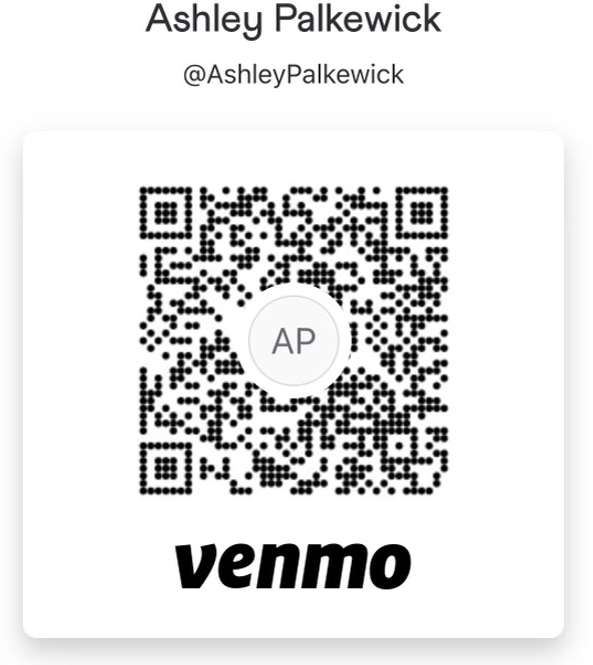
Raffle tickets may be purchased two ways: please either venmo at the following: @AshleyPalkewick or mail a check to the attention of Carol Wright, Capehart Scatchard, 8000 Midlantic Drive, Suite 300S, Mount Laurel, NJ  08054.  Carol will mail the tickets directly to you at the address you request upon receipt of payment. 

On behalf of Kids Chance of New Jersey, we thank you for your generosity, interest and support!

The post Kids Chance of New Jersey Needs Your Help In Fundraising Raffle For Students appeared first on NJ Workers' Comp Blog.

After receiving numerous public comments, on January 7, 2021, the New Jersey Supreme Court has ordered that virtual jury trials are to proceed, starting on February 1, 2021. They will be implemented in a two phase approach in a limited number of vicinages on a voluntary basis starting February 1, 2021 and on a mandatory basis statewide starting on April 5, 2021.

The rationale appears to be able to move cases to a resolution. Without facing a trial, often parties are not realistic in trying to resolve their case. No doubt many cases will settle to avoid a virtual jury trial.

The Court noted that “countless civil litigants whose trials have been indefinitely delayed during the pandemic have not been able to resolve important disputes” and that the courts and attorneys have developed expertise in participating in virtual proceedings. Further, with training and support from the Judiciary, New Jersey residents have been able to serve as jurors in hybrid trials and grand jury panels, using their own technology or technology provided by the courts.

Hence, the Supreme Court entered an order that, during the duration of the COVID-19 pandemic, all civil jury trials will be conducted in a virtual format. In the first phase, consent to proceed remotely will be required. Phase 1 will include a limited number of vicinages: Atlantic/Cape May; Cumberland/Gloucester/Salem; Monmouth; Passaic; and Union. Phase 2 will start on or after April 5, 2021 and virtual civil jury trials will expand to all counties and no consent will be required. Phase 2 will continue as long as necessary based on the COVID-19 pandemic.

While all civil cases will be eligible for virtual civil jury trials, to the extent possible, each county will begin with cases involving a single plaintiff, a single defendant, a limited number of issues in dispute, and a modest number of live witnesses. Jury selection will be entirely virtual. Empaneled jurors will participate remotely with tablets provided by the court unless they can demonstrate that they are able to use their own technology.

At the pretrial conference with the judge, all aspects of the virtual process will be covered, including whether the judge, attorneys, and parties will be present in the courtroom or whether any or all of them will participate remotely. The judges and attorneys may agree to a hybrid format with the judge, attorneys, and witnesses participating from the courtroom.

The first virtual civil jury trials will be recorded and may be used for purposes of attorney and juror training for future virtual jury trials.


Betsy G. Ramos, Esq. is a member of the firm’s Executive Committee and Co-Chair of the Litigation Group. She is an experienced litigator with over 30 years’ experience handling diverse matters. Her practice areas include tort defense, insurance coverage, Tort Claims Act and civil rights defense, business litigation, employment litigation, construction litigation, estate litigation and general litigation.

As the Moderna and Pfizer COVID-19 vaccines begin to be administered to the population in the United States, many clients have asked whether an adverse reaction to the COVID-19 vaccine would be considered compensable if the employer were to offer a voluntary vaccination program at some time in the future.  Many employers currently offer such programs during flu season.  This is an important question but unfortunately there is precious little case law to guide us in New Jersey and in most states.   

The last published case in New Jersey on the compensability of an adverse reaction to a vaccine goes all the way back to 1949 in Saintsing v. Steinbach Company, 1 N.J. Super. 259 (App. Div. 1949). The case involved an employer which sent out a notice strongly urging employees to get the smallpox vaccine.  The notice read, “On April 23, 1947, we will provide free inoculation to all those who choose to be immunized against smallpox.  We are sure that everyone is aware of the current spread of smallpox and we strongly urge that you take advantage of this service, which we are glad to provide in the interest of your health.”

Most of the company employees, including the petitioner, were vaccinated, but petitioner developed a reaction that caused her to lose time from work and to suffer partial permanent disability.  The respondent’s personnel director testified at trial that this vaccination offer was made to promote morale, create a happier environment for employees and to reduce absenteeism.  He stressed that the vaccination was entirely voluntary.  The Judge of Compensation ruled that the adverse reaction was compensable.  The Monmouth County Court reversed in favor of the employer, but the Appellate Division reversed again in favor of the employee.  The Appellate Division focused on two factors:  one, that the employer strongly urged employees to be vaccinated, and two, the mutual benefit doctrine.  “We have concluded that the activity was mutually beneficial, that the risk was reasonably incident to the employment and that the petitioner’s injury resulted from an untoward event or accident arising out of and in the course of her employment….”

The better argument is that adverse reactions to voluntary vaccination programs offered by employers are not covered under workers’ compensation and that Saintsing has been effectively overruled by subsequent statutory changes.  First, the New Jersey Workers’ Compensation Act underwent a wholesale revision in 1979.  There is no mention of the mutual benefit doctrine in the modern statute, and there are very few post-1979 cases that discuss the doctrine.  The court in Saintsing based its decision largely on the mutual benefit doctrine along with a “strong urging” by the employer to participate in the program.  Before 1979, there were literally scores of cases whose outcome depended on the mutual benefit doctrine.  In fact, the Saintsing case has not been discussed by any published case in New Jersey since 1979.

More importantly, a new provision was added in 1979 to N.J.S.A. 34:15-7 which moved courts away from the nebulous mutual benefit doctrine.  The law adopted in 1979 states that social activities are not compensable unless the employee can show the activity is a regular incident of employment and promotes a benefit beyond improvement of health and morale.  The main purpose an employer would have in offering a vaccination program to employees is precisely improvement of employee health and morale.  Of course there may be some mutual benefit to the employer but that is not the test in this statute. The injured employee would have to show that a critically important public health program is really focused on some other benefit to the employer beyond the obvious one:  making sure its employees are healthy and not spreading a highly contagious and deadly virus to others.  Until a reported decision comes down, no one can know for sure how the Appellate Division or New Jersey Supreme Court will rule on this issue.

What if the employer mandates that an employee must get the vaccine as a condition of continued employment, and then the employee develops an adverse reaction?  The mandatory nature of the program would likely result in a ruling for petitioner.  There are a number of New Jersey Supreme Court cases that have held that employees who are required to undertake certain actions that would otherwise be non-compensable and then are injured performing those actions are covered for purposes of workers’ compensation.  The theory of these cases is that compelling an employee to perform an action renders the action compensable.

When a vaccine is not compensable in workers’ compensation, are there any benefits available to someone who develops an adverse reaction to the vaccine?  The answer is yes.  There are two important federal programs that assist such individuals. The first is the National Vaccine Injury Compensation Program.  Petitions must be filed, with limited exceptions, within three years after the first symptom of the alleged vaccine injury, or within two years of the death and four years after the first symptom of the alleged injury the resulted in death.

The other program is called the Countermeasures Injury Compensation Program.  Compensation under this program includes unreimbursed medical expenses that health insurance did not cover, lost employment income, and a survivor death benefit.  A countermeasure is a vaccine, medication, device, or other item that is used to prevent, diagnose or treat a public health emergency or a security threat.  COVID-19 is among the specific public health threats covered in the program.

It is important to realize that there is one and only one statutory provision in the New Jersey Workers’ Compensation Act that applies to injuries arising from the administration of a vaccine.  This statute is part of the 2019 Thomas P. Canzanella Law, but it applies solely to first responders and public safety workersThe statute can be found at N.J.S.A. 34:15-31.6.  It reads:  “Any injury, illness or death of any public safety worker, resulting from the administration to the worker of a vaccine including, but not limited to, smallpox vaccine, to prepare for, or respond to, any actual, threatened, or potential bioterrorism or epidemic, as part of an inoculation program in connection with the worker’s occupation, geographical area, or other category that includes the worker, or resulting from the transmission of the disease from another employee or member of the public inoculated under the program, is presumed to arise out of and in the course of the employment and all care or treatment of the worker, including testing, diagnosis, surveillance and monitoring of the worker’s condition, and all time during which the worker is unable to work while receiving the care or treatment is compensable under the provisions of R.S. 34:15-1 et  seq.”  As with other statutory presumptions, the employer can rebut the presumption by a preponderance of the evidence standard, meaning proof by more than 50% that the adverse reaction is not work related.

The post Adverse Reactions to Vaccinations: Current Issues in Workers’ Compensation appeared first on NJ Workers' Comp Blog.

We can all be thankful for what we do have and remember to help those who are less fortunate than we are.  This year has taught us many lessons in so many different areas. 

We have had so many experiences that, last year at this time, we would have never dreamed of having.  Let us hope that each of us has grown with our changed world and that we do our part each and every day to be safe, to promote the safety of others and to help those in need.

There are so many people to be remembered – those who did not have the strength to overcome COVID as well as those who gave of themselves in the fight of COVID.  And, so many other heroes who came forth this year in so many ways. 

Rather than my usual blog for this week, I wanted to thank you for the comments regarding these writings, which I hope you have found to be useful.  I try to make them practical with useful information.  There will be more to come in 2021.

As 2020 comes to a close, I wish all a happy holiday season for whatever traditions you celebrate and that with the fresh start of 2021, we can make it a year of moving forward and looking to a brighter tomorrow. 

Happy Holidays and Happy New Year. 

It remains very difficult for New Jersey insurers to cancel policies in workers’ compensation.  Strict compliance with N.J.S.A. 34:15-81 is required because the state’s policy favors continuation of insurance coverage. The decision in Pierson v. Travelers Indemnity Company, A-3838-19T2 (App. Div. December 7, 2020) illustrates the specific problem of cancellation related to non-payment of an audit increase of premium.

Nelson Pierson alleged he was injured at Tremarco Brothers on May 7, 2016.  The carrier moved to dismiss the workers’ compensation claim petition based on the cancellation of Tremarco’s insurance coverage.  The coverage at issue began in March 2014.  Tremarco applied to the New Jersey Workers’ Compensation Plan for assignment of an insurance company for workers’ compensation coverage.  Travelers was assigned and provided coverage for 2014-2015.  It also issued a policy for 2015-2016.

The problem in this case began when the carrier requested an audit during the second policy term.  The carrier said that Tremarco failed to cooperate with the audit.  The result of the audit led to an amount almost double the previously billed premium.  In the pivotal allegation of the case, the carrier alleged that it sent on July 6, 2015 a notice that declared the policy would be cancelled on July 24, 2015 if Tremarco did not pay the additional premium.  When Tremarco failed to pay the additional premium by July 24, 2015, the policy was cancelled.

Travelers produced as its witness Timothy Lukes, a senior account manager underwriter, but Lukes was not actually the individual who handled the Tremarco account. Therefore Lukes’ testimony was limited to discussion of how the carrier conducts premium audits and cancellation of policies.  The Judge of Compensation noted that Lukes was “unable to explain specific actions or the reasons for the actions taken by Travelers on the Tremarco account.”  The individual who actually handled the Tremarco account was not called to testify.

It was the position of the carrier that the July 6 notice would have advised Tremarco that the policy would be cancelled on July 24 unless the additional premium were timely paid.  The Judge of Compensation felt that this testimony was at odds with another statement Lukes made, namely that when an additional premium after an audit is being sought, the notice would not ordinarily state that a failure to pay would result in cancellation, only that the failure “can affect your insurability.”

The Judge of Compensation concluded that the cancellation was not clear and unambiguous.  The carrier appealed, and the Appellate Division affirmed the conclusion of the Judge of Compensation, rejecting the cancellation. The Appellate Division found it significant that the carrier never produced a witness with personal knowledge of the mailing and receipt of the cancellation notice. The Appellate Division recognized that “facts about mailing may be proven with evidence of an office custom,” but the Court did not believe that sufficient evidence of office custom was proffered. The Court concluded that ultimately it was not clear what the July 6 notice actually said.  That fact more than any other doomed the cancellation.

The case shows just how hard it can be to effect cancellation of a policy in New Jersey even when an insured refuses to participate in an audit of its premium and then fails to make timely payment.  The public policy in favor of continuation of coverage is so powerful that it can only be overcome with absolute precision with respect to every element of N.J.S.A. 34:15-81, and any variation whatsoever can result in voiding an otherwise legitimate attempt to cancel a workers’ compensation insurance policy.

The post Appellate Division Holds Insurance Carrier Failed to Prove Proper Cancellation of Policy appeared first on NJ Workers' Comp Blog.
With the holiday season now upon us, there are growing concerns about how the COVID-19 pandemic could worsen because of the expected social gathering activities associated with the holiday season, and how that could impact New Jersey workplaces. The Centers for Disease Control (“CDC”) has already issued directives that persons should not travel during the holiday season, and that they should likewise keep their gatherings small (ideally limited to their own households), and where possible, keep them outside to maintain good social distancing. In light of the CDC’s directive, I have gotten several questions from clients about what employers can do to ensure that their employees follow such directives and engage in safe behavior during the upcoming holidays. The answer to those questions will likely surprise you.

Believe it or not, even in a place like New Jersey which is very pro-employee, employers can actually demand that their employees refrain from travelling during the holiday season, and likewise minimize their social contacts and holiday gatherings, even when such conduct is happening outside of working hours. Why? Because of the public health crisis caused by COVID-19, employers have a right (and some would say a legal duty) to safeguard their workplaces, and in light of the CDC directive against holiday travel, employers can mandate no employee travel and likewise require that employee family and other related social gatherings also adhere to CDC recommendations. Employers have been given a great deal of latitude during this public health emergency in taking steps to protect the workplace, and requiring employees to adhere to the recent CDC directives fall within the scope of that discretionary authority.

So, in light of the above, are you telling me that as an employer, I could actually discipline or even fire an employee who fails to follow the CDC recommendations? My answer: absolutely.  Most employees in New Jersey are at will, meaning that an employee can be fired for any reason, or no reason at all, so long as it is not an illegal reason. There is no legal prohibition in New Jersey that would prevent an employer from firing or disciplining an employee who refuses to adhere to an employer directive that an employee not travel during the holidays and/or minimize their family gatherings in light of the concerns raised by the CDC. Some states like Colorado and California have laws that prevent employers from firing employees for doing lawfully allowable things outside of work hours, but New Jersey has no such law. Thus, if an employer wants to mandate that its employees follow what the CDC has mandated about travel and social gatherings during this holiday season, employers in New Jersey are free to impose such requirements, and may issue appropriate discipline if employees fail to follow such requirements.

So, employers here in New Jersey have one more tool to use in protecting the workplace while the COVID-19 pandemic continues to wreak havoc on day to day life.

I wish everyone a safe and happy holiday season.


Ralph R. Smith, 3rd is Co-Chair of the Employment and Labor Practice Group. He practices in employment litigation and preventative employment practices, including counseling employers on the creation of employment policies, non-compete and trade secret agreements, and training employers to avoid employment-related litigation. He represents both companies and individuals in related complex commercial litigation before federal states courts and administrative agencies in labor and employment cases including race, gender, age, national origin, disability and workplace harassment and discrimination matters, wage-and-hour disputes, restrictive covenants, grievances, arbitration, drug testing, and employment related contract issues.

Not surprisingly, due to the COVID-19 surge of cases, the New Jersey Supreme Court has once again suspended jury trials. They had resumed earlier in the fall on a limited basis as a hybrid with virtual jury selection and socially distanced trials. However, with this second wave of new COVID-19 cases, the Court deemed it unsafe to conduct any new in person jury trials. Hence, by order of November 16, 2020, any new in person jury trials are suspended pending further order.

If you received an Economic Impact Payment, you would have received Notice 1444, Your Economic Impact Payment.  This Notice should be kept with your tax records for tax year 2020. This notice provides information about the amount of the payment, how the payment was made and how to report any payment that wasn’t received.

For security reasons, the IRS will mail this notice to each recipient’s last known address within 15 days after the payment goes out. It’s especially important for people to keep this notice if they think their payment amount is wrong. When filing the 2020 tax return, taxpayers can refer to Notice 1444 and claim additional credits, if the taxpayer is eligible for them.

This Notice should be kept with a copy of your tax returns and all other important tax records.  The IRS recommends keeping these documents for at least three years.  A prior return can contain information needed to prepare a subsequent return. 

Capehart Blogs

Subscribe to Blog Updates

Categories